Before hiring any China trademark agent, verifying their CNIPA accreditation is the single most important step you can take. An unaccredited agent cannot legally represent foreign applicants, and engaging one can lead to rejected applications, lost fees, and compromised trademark rights. Here is how to verify accreditation through official channels.
Method 1: CNIPA Official Website Search
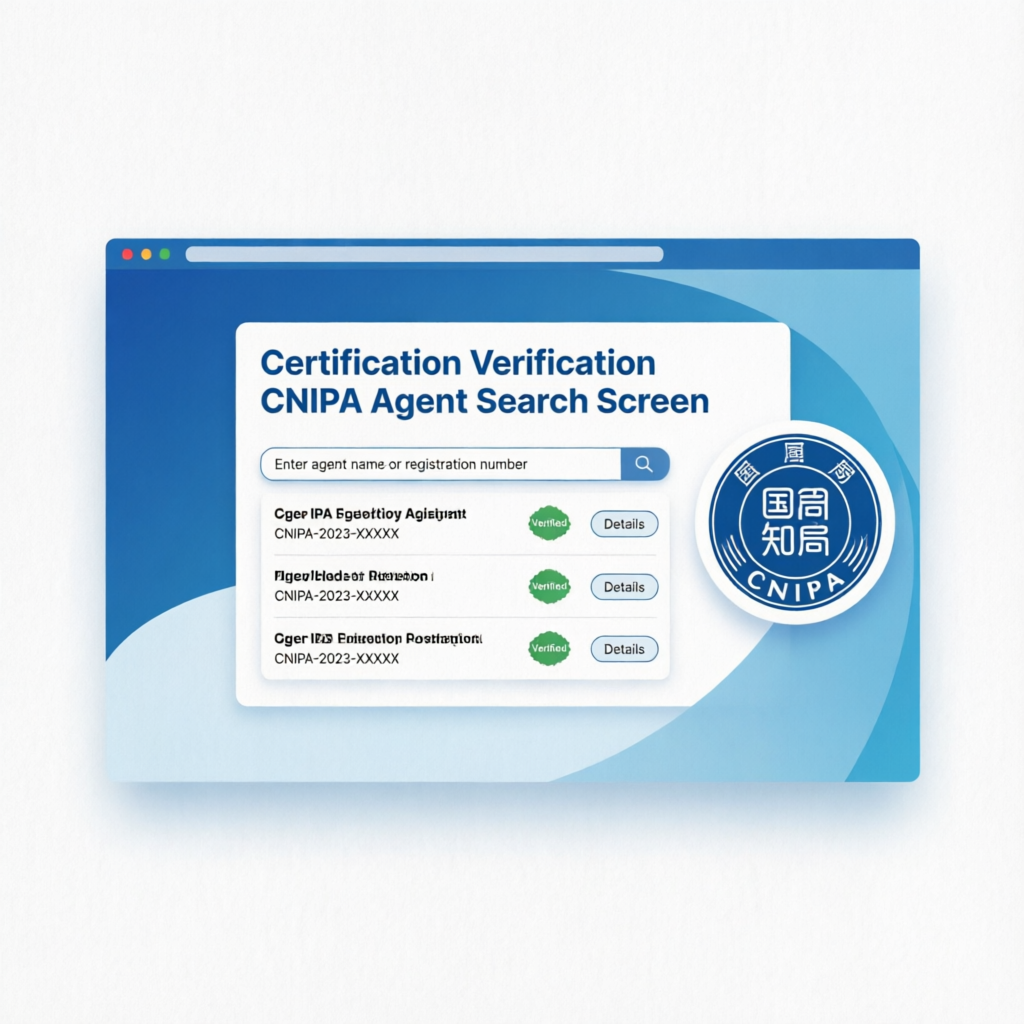
Visit the CNIPA Trademark Office website (sbj.cnipa.gov.cn) and navigate to the agent/firm search database. Enter the agent’s or firm’s name in Chinese. The system will display their registration number, status, and any disciplinary history.
Step-by-Step Verification
- Open the CNIPA Trademark Office website and switch to Chinese
- Locate the trademark agent or agency search tool
- Enter the agent’s name (Chinese characters) or qualification number
- Review the registration status and disciplinary record
- Save or screenshot the result for your records
Method 2: Check the Agent Qualification Number
Every CNIPA-accredited agent has a unique qualification number. Ask the agent for this number and verify it independently through the CNIPA database. Do not rely solely on what the agent tells you.
Cross-Check the Number Against the Name
A legitimate qualification number must match the agent’s registered name in the CNIPA system. A number that belongs to someone else, or that returns no result, is a strong sign that something is wrong.
Method 3: Verify Firm-Level Accreditation
Some agents work under a law firm or IP agency. Verify the firm’s accreditation separately from the individual agent. The firm should be listed as an accredited trademark agency in the CNIPA registry.
Confirm the Agent-Firm Relationship
Ensure that the individual handling your case is actually affiliated with the accredited firm, and not a third party borrowing the firm’s name. Ask for confirmation of the employment or partnership relationship in writing.
Verifying Accreditation Through Your Own Network
In addition to official channels, corroborate an agent’s standing through independent sources. Ask foreign business associations, chambers of commerce, and other applicants in your industry for referrals and candid feedback. A consistent reputation across official records and peer recommendations is the strongest possible signal that an agent is both accredited and reliable in practice.
Red Flags to Watch For
The following warning signs should prompt you to stop and investigate further before proceeding.
| Red Flag | What It Suggests |
|---|---|
| Agent or firm not found in the CNIPA database | Unaccredited and unauthorized to file |
| Qualification number does not match the agent’s name | Possible impersonation or false credential |
| Disciplinary sanctions or complaints on record | History of professional misconduct |
| Firm registered but individual not listed | Unqualified person handling your case |
| Refuses to provide a qualification number | Likely unaccredited |
What to Do If You Discover a Problem
If your verification reveals a discrepancy, do not proceed with the engagement. Report the issue to CNIPA if you suspect fraud, and start over with a vetted, accredited agent. The cost of pausing is small compared to the risk of losing your trademark rights through unauthorized representation.
Why Accreditation Matters for Foreign Applicants
For foreign applicants, CNIPA accreditation is not a formality—it is a legal requirement. Chinese trademark law requires that foreign applicants without a domicile or real business presence in China be represented by a locally accredited trademark agent. An unaccredited representative cannot file on your behalf, and any application submitted through one is vulnerable to rejection.
Accreditation also functions as a quality signal. To become a CNIPA-accredited agent, an individual must pass the national trademark agent examination and maintain good standing. The credential does not guarantee excellence, but it establishes a baseline of legal competence and professional accountability that unaccredited operators cannot offer.
When you verify accreditation before engaging an agent, you protect yourself against the most serious risks in the process—wasted fees, missed deadlines, and the loss of trademark rights through unauthorized or incompetent representation.
Related Articles
- How to Choose a China Trademark Agent
- China Trademark Agent Fee Comparison
- China IP Agency Cost Comparison
Official Resources
Disclaimer: Verification procedures may change. Always use the most current CNIPA database.