In China, a trademark that has not been used for three consecutive years can be cancelled by any third party. Proactively collecting and managing use evidence is critical to defending your registration and maintaining your trademark rights.
What Qualifies as Valid Use Evidence?
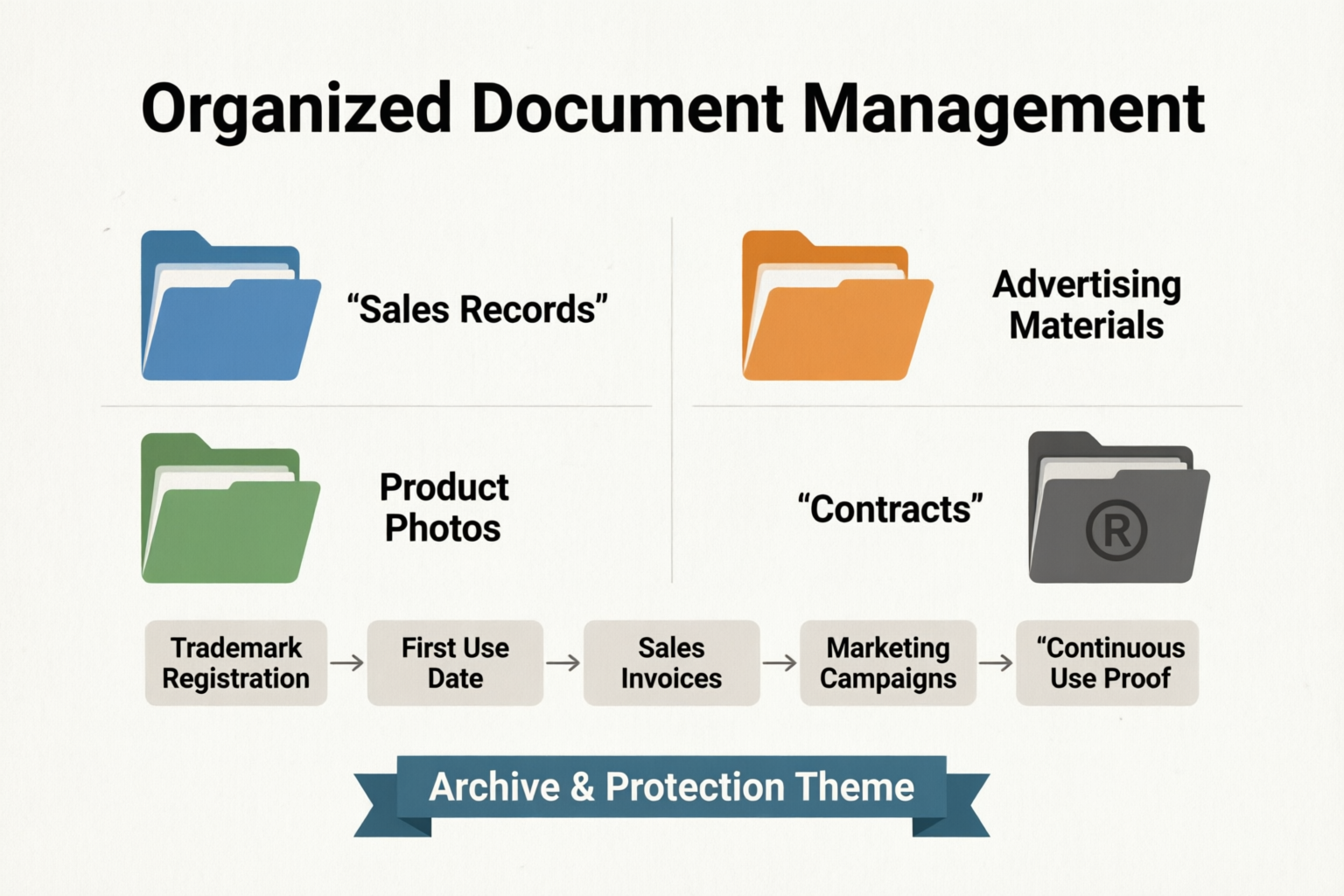
CNIPA requires evidence of genuine commercial use within China. The strongest evidence ties your registered mark directly to the goods or services, in a form that a third party could independently verify. Organize your evidence into three categories for a complete, persuasive record.
Sales and Transaction Evidence
- Sales invoices and contracts: Must show the trademark, goods/services, dates, and be issued in China
- Export and customs records: Documents showing goods bearing the mark entering or leaving China
- Financial records: Bank statements and tax filings showing revenue from the marked goods
Product and Packaging Evidence
- Product packaging and labels: Photos showing the mark as actually used on products sold in China
- Product samples and manuals: Physical examples bearing the mark as registered
Marketing and Media Evidence
- Advertising materials: Chinese-language ads, brochures, online listings (Tmall, JD.com, WeChat)
- Exhibition participation: Booth photos, exhibition contracts, attendee materials from Chinese trade shows
- Media coverage: Chinese media articles, press releases mentioning your brand
What Does NOT Count?
Not all activity qualifies as genuine use. CNIPA rejects token or symbolic use and evidence that does not connect the mark to actual commercial activity in China.
- Token use (a single small transaction to avoid cancellation)
- Use only outside China (must be use within China)
- Internal documents not available to the public
- Use that differs substantially from the registered mark
Evidence Management Best Practices
Evidence is only useful if it exists when you need it. Build a system now, before any cancellation action is filed against you.
Collect Continuously
Save evidence for each year, not just when a cancellation action is filed. A continuous, year-by-year record is far more persuasive than a hurried collection assembled after you receive a cancellation notice.
Keep Originals
Original documents carry more weight than copies or scans. Where originals are digital (such as e-commerce listings), preserve screenshots together with timestamps and, ideally, notarization.
Maintain a Use Diary
Record dates, volumes, channels, and geographic coverage of use. A well-maintained use diary helps you quickly assemble a complete evidence package and demonstrates organized, continuous commercial activity.
Notarize Key Evidence Annually
Notarized evidence is stronger and harder to challenge. Consider notarizing your most important evidence—such as sales of your best-selling product—once a year so that it is ready and admissible when needed.
How to Respond to a Non-Use Cancellation Action
If a third party files a non-use cancellation action against your mark, you must respond within the deadline set by CNIPA—typically two months. Missing this deadline usually results in automatic cancellation of your registration.
| Step | Action |
|---|---|
| 1 | Confirm the deadline and the exact three-year period challenged |
| 2 | Assemble use evidence covering the relevant period |
| 3 | Prepare a Chinese-language response with notarized translations |
| 4 | File the response through your agent before the deadline |
Common Mistakes to Avoid
Many trademark owners only realize their evidence is inadequate after a cancellation action has already been filed. Avoiding these common mistakes significantly improves your chances of defending your registration.
- Waiting until a cancellation is filed: Evidence gathered after the fact is harder to authenticate and less persuasive
- Relying on foreign use: Only use within China counts; foreign sales and marketing do not satisfy the requirement
- Keeping only digital copies: Originals and notarized versions carry far more weight than unverified scans
- Using a modified mark: Use that differs substantially from the registered form may not count as use of your mark
- Ignoring the three-year clock: Non-use cancellation can be filed by any party once the mark is unused for three consecutive years
The best defense is a proactive evidence system. By collecting, dating, and notarizing evidence every year, you ensure that a cancellation challenge never catches you unprepared.
Related Articles
- Three-Year Non-Use Cancellation: How to Defend Your Mark
- China Trademark Renewal Cost and Grace Period
Official Resources
Disclaimer: Use evidence requirements may vary by case. Consult a qualified agent.